When Your Cat Purrs, Your Body Listens: The Surprising Science of Shared Healing
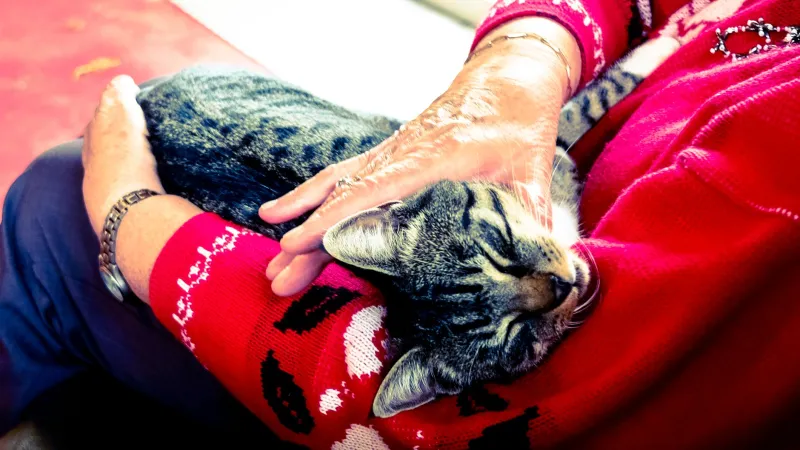
You've probably noticed it before — you settle into the couch, your cat curls up next to you, and somewhere between the first rumble of their purr and the second episode of whatever you're streaming, your shoulders drop about three inches. Your jaw unclenches. Your breathing slows. It feels like magic, but researchers are starting to suspect it's actually physics.
The purr, it turns out, is doing something real to your body. And when you pair that natural feline frequency with intentionally calming ambient sound — the kind you'd find on a platform like Cat Calm Radio — the effect might be even more powerful than either source alone.
The Frequency That Does the Work
Cat purrs aren't just cute background noise. They operate within a specific vibrational range — roughly 25 to 150 Hz — and that range is notable for reasons that go way beyond feline communication. Frequencies in that neighborhood have been studied for their potential therapeutic effects on human tissue, including bone density, muscle recovery, and even cardiovascular function.
But here's the part that's especially relevant if you're someone who unwinds with your cat after a long day: that same frequency band overlaps with the range associated with reduced physiological stress in humans. Studies have found that exposure to low-frequency vibrations in the 25–50 Hz range can contribute to lower cortisol output — cortisol being the hormone most closely linked to chronic stress. Sit close enough to a purring cat, and you're essentially bathing in a gentle, biological stress-dampening signal.
Researchers at institutions like the University of Minnesota's Human-Animal Bond Research Institute have explored how cat ownership correlates with lower rates of cardiovascular events, including heart attacks and strokes. While the purr itself isn't the only variable, it's increasingly seen as a meaningful contributor to those outcomes — not just a pleasant side effect of having a cat around.
Two Bodies, One Shared State
What makes the purr-and-human dynamic particularly fascinating is that it appears to be bidirectional. Your cat purrs partly as a self-soothing mechanism — it's how they regulate their own nervous system during rest, recovery, and even moments of uncertainty. But when you're on the receiving end of that sound and vibration, your body starts to mirror some of that same regulation.
This is where the concept of co-regulation comes in. Borrowed from developmental psychology, co-regulation refers to the way two nervous systems can influence each other through proximity, touch, and shared sensory experience. It's the same reason why sitting next to a calm person makes you feel calmer, or why a baby settles when held by a relaxed caregiver. Cats and their humans appear to do a version of this naturally — and the purr is one of the primary mechanisms driving it.
At Cat Calm Radio, listeners frequently describe their shared listening sessions with their cats as feeling almost meditative — not because they're trying to meditate, but because something in the combination of ambient sound and feline presence just tips them over into a genuinely restful state. That anecdotal pattern lines up neatly with what the research is pointing toward.
What Happens to Your Blood Pressure
Cortisol isn't the only biomarker worth paying attention to here. Blood pressure is another one. Petting a cat has long been associated with measurable drops in blood pressure among human subjects — a finding robust enough that it's been replicated across multiple studies over several decades. What's newer is the growing interest in whether the auditory and vibrational components of the purr contribute to that effect independently of touch.
Preliminary findings suggest they might. When subjects are exposed to recorded purr frequencies in a controlled setting — no actual cat present — some still show measurable physiological changes. That's significant, because it suggests the frequency itself carries therapeutic weight, not just the warmth of the animal or the act of petting.
For Cat Calm Radio users, this opens up an interesting possibility: ambient soundscapes that incorporate or complement purr-range frequencies could be actively supporting your stress response, even during the parts of the day when your cat is off doing cat things in another room.
Building a Listening Environment That Works for Both of You
If you want to lean into this shared healing dynamic intentionally, the setup doesn't have to be complicated. A few things tend to make co-listening sessions more effective for both species.
Keep the volume conversational. Cats have far more sensitive hearing than we do, and sounds that feel pleasantly ambient to you can register as intrusive to them. A good rule of thumb: if you can hear it clearly from across the room without straining, it's probably in a comfortable range for your cat too.
Let your cat lead the proximity. The stress-relief benefits of a purring cat are most potent when the cat is actually relaxed — which means they need to feel like the session is their choice. Create a comfortable shared space and let them come to you. A cat who's settled voluntarily is a cat who's likely to purr, which means you both win.
Match the mood of the soundscape to the time of day. Slower tempos and lower tonal ranges tend to work well for evening wind-down sessions. If you're a Cat Calm Radio listener, the more ambient, nature-forward tracks tend to complement a purring cat particularly well — there's a harmonic compatibility between those sounds and the frequencies your cat is already generating.
Give it time. The physiological effects of this kind of shared listening aren't instant. Cortisol levels don't plummet in the first two minutes. But give it fifteen or twenty minutes of genuine stillness, and both you and your cat are likely to be in a measurably different state than when you started.
Why This Matters Beyond the Couch
We tend to frame stress relief as something we have to go get — a yoga class, a therapist's appointment, a meditation app with a monthly subscription. But the purring animal you already share your home with is generating a therapeutic frequency on a daily basis, often for free, often right next to you.
The science isn't fully settled — there's more research to be done, more mechanisms to untangle. But what's already clear is that the relationship between a cat's purr and a human's nervous system is more than sentimental. It's physiological. It's measurable. And it's available to you every time your cat decides to settle in and let you listen.
That's a pretty good deal for both of you.