Why Your Cat Actually Responds to Music: The Fascinating Brain Science of Feline Sound Perception
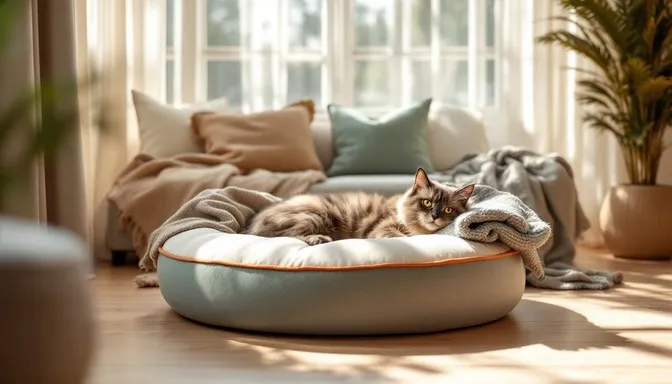
Photo: cat relaxing listening to music peaceful home, via i.pinimg.com
Your Cat Is Listening More Than You Think
Most of us have caught our cats doing something inexplicable in response to sound — freezing mid-groom when a particular song comes on, or curling tighter into a ball when ambient noise fills the room. For a long time, we chalked it up to quirky cat behavior. But over the past decade or so, researchers have started pulling back the curtain on exactly what's happening inside a cat's brain when sound enters the picture — and the findings are genuinely fascinating.
Here at Cat Calm Radio, we've built an entire platform around the idea that the right sounds can meaningfully improve a cat's quality of life. And it's not just a vibe — the science actually backs it up.
Cats Hear the World Completely Differently Than We Do
Let's start with the basics: cats are not small humans. Their auditory systems are built for a completely different purpose than ours. While humans can hear frequencies ranging from roughly 20 Hz to 20,000 Hz, cats can detect sounds all the way up to 79,000 Hz. That's nearly double the upper range of dogs, and it's far beyond anything a human ear can register.
This exceptional high-frequency hearing evolved for one primary reason — hunting. Small prey like mice and birds produce ultrasonic vocalizations that cats are hardwired to detect. Those 32 muscles controlling each of a cat's ears aren't just for looking adorable; they're precision instruments, constantly rotating and adjusting to triangulate the source of a sound with remarkable accuracy.
What this means practically is that your cat's experience of any given audio environment is radically different from yours. Sounds that seem gentle and background-level to you might feel sharp or intrusive to your cat. And sounds you barely register might be the exact frequency range triggering stress in a sensitive feline.
The Research on Music and Cat Relaxation
In 2015, researchers at the University of Wisconsin-Madison published a genuinely groundbreaking study in the journal Applied Animal Behaviour Science. The team, led by psychologist Charles Snowdon and musician David Teie, developed what they called "species-appropriate music" — compositions built around the natural vocalizations and tempos of cats themselves rather than human musical conventions.
Here's the key insight from that research: cats largely showed indifference to human music — classical, pop, whatever — but responded positively and with measurable behavioral signs of engagement and calm when exposed to music designed specifically around feline communication frequencies. The cat-specific compositions incorporated sounds like purring (which sits around 25–50 Hz) and the chirping vocalizations cats make, layered into melodic structures.
A follow-up study published in the Journal of Feline Medicine and Surgery in 2019 looked at cats in a veterinary clinic setting — one of the most stressful environments a domestic cat can encounter. Cats exposed to species-appropriate music showed significantly lower stress scores compared to those in silence or exposed to standard human music. That's not a small finding. Veterinary stress is a real welfare concern, and the idea that ambient sound could meaningfully reduce it is significant.
Tempo, Frequency, and Why Slower Is Calmer
So what specific musical elements seem to matter most? Researchers and animal behaviorists point to a few consistent factors.
Tempo plays a huge role. Cats at rest have a resting heart rate of roughly 140–220 beats per minute, but the purr — that iconic sound associated with contentment — typically cycles at 25–50 Hz. Music with slower, more deliberate tempos tends to mirror the physiological state of a relaxed cat rather than an agitated one. Fast, percussive music can actually elevate stress rather than reduce it.
Frequency range is equally important. Lower to mid-range frequencies tend to be less jarring to the feline auditory system. This is part of why deep, resonant ambient soundscapes — think gentle rain, low drones, or soft string instruments — seem to work better than bright, treble-heavy recordings. The upper frequencies that humans find pleasantly crisp can land in an entirely different register for cats.
Predictability and repetition also appear to matter. Sudden dynamic shifts — a dramatic crescendo, a surprise percussion hit — trigger the feline startle response. Calming audio tends to be consistent and gradual, without jarring transitions. Think of it as the audio equivalent of a calm, predictable environment.
Anxiety, Stress, and the Nervous System Connection
Understanding why this all matters requires a quick look at how stress works in cats. Domestic cats are both predator and prey animals evolutionarily, which means their nervous systems are finely tuned to detect environmental threats. Loud, unpredictable, or high-frequency sounds can activate the sympathetic nervous system — the "fight or flight" response — even when there's no actual danger present.
Chronic low-level stress in cats is more common than many owners realize. It can manifest as over-grooming, hiding, changes in appetite, or litter box issues. Environmental sound is one of the triggers that often goes unaddressed simply because we don't think of our audio environment as something that affects our pets.
Conversely, consistent exposure to calming sound frequencies appears to support the parasympathetic nervous system — the "rest and digest" state. Some researchers have drawn comparisons to the way white noise or nature sounds help anxious humans sleep; the mechanism isn't identical, but the general principle of using predictable, low-stimulation audio to down-regulate a stressed nervous system seems to translate across species.
What This Means for Life at Home
You don't need a lab or a specialized speaker system to put this science to work. The practical takeaways are pretty accessible.
First, pay attention to the ambient sound level in your home. Households with TVs running constantly, loud music, or frequent high-pitched household sounds (like certain appliances) may be inadvertently stressing out sensitive cats. Simply reducing background noise chaos can make a meaningful difference.
Second, when you do play audio for your cat, lean toward lower-tempo, lower-frequency options. Gentle acoustic music, ambient nature sounds like light rain or a quiet stream, or purpose-built cat-relaxation audio all fit the bill. This is exactly the kind of content we curate here at Cat Calm Radio — not just background noise, but thoughtfully selected soundscapes designed with feline neuroscience in mind.
Third, consistency matters. Playing calming audio at specific times — during meals, before you leave for work, or during nap hours — can help your cat build positive associations with those sounds. Over time, the audio itself can become a cue for relaxation.
The Bottom Line
Cats aren't passive recipients of their sound environment. They're actively processing, filtering, and responding to audio in ways that directly affect their emotional and physical state. The research is still evolving — this is a relatively young field — but what we already know is compelling enough to take seriously.
Your cat's ears are extraordinary instruments. Treating the sounds they pick up with a little more intentionality might just be one of the simplest, most effective things you can do for their wellbeing. And honestly? A calmer cat usually means a calmer home for everyone.