Home Alone and Stressed: Using Music to Help Your Anxious Cat Cope While You're Gone
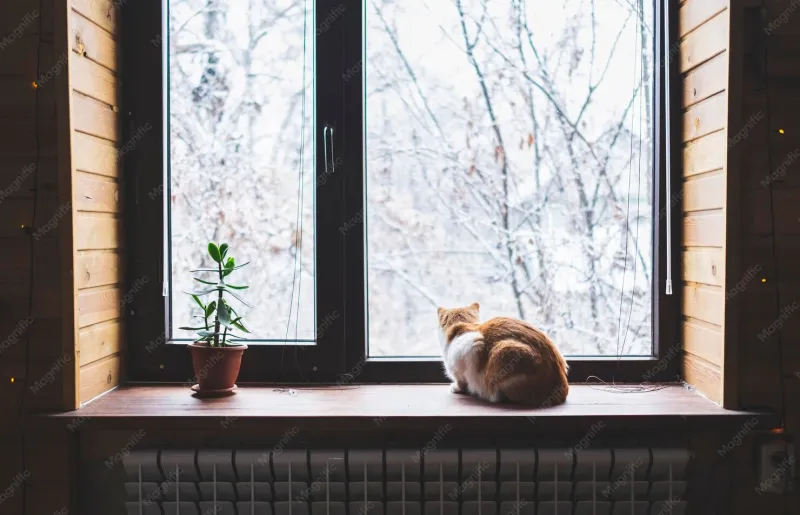
Photo: cat sitting alone by window looking outside in quiet home interior, via img.freepik.com
There's a persistent myth that cats are the low-maintenance pets — aloof, self-sufficient, totally fine on their own. And while cats are certainly more independent than dogs in many ways, a growing body of veterinary research is making it clear that feline separation anxiety is a very real condition affecting a significant number of household cats in the US. If your cat is shredding the couch, yowling at the door, or stress-grooming patches of fur while you're at work, you're not imagining things.
What you might not have tried yet is sound.
Recognizing What Separation Anxiety Actually Looks Like
Before getting into solutions, it helps to know what you're dealing with. Feline separation anxiety doesn't always look dramatic. It can be subtle — a cat who seems unusually clingy the moment you pick up your keys, or one who eats inconsistently when left alone, or who greets you at the door with an intensity that feels less like affection and more like relief.
More obvious signs include:
- Destructive behavior concentrated around your absence (scratched furniture, knocked-over items)
- Inappropriate elimination — using the bathroom outside the litter box, often on your belongings
- Excessive vocalization reported by neighbors or caught on a pet camera
- Over-grooming that leads to bald patches, typically on the belly or inner legs
- Appetite changes, particularly eating very little while alone
The triggers vary. Some cats develop anxiety after a major household change — a move, a new baby, a schedule shift back to the office after remote work. Others have had it quietly their whole lives. Rescue cats, particularly those with uncertain early histories, are often more prone to it.
Why Audio Works as an Anxiety Intervention
Here's the core idea: cats experience the world primarily through sound and scent. When you leave, the auditory landscape of your home changes completely. The ambient noise of your presence — your footsteps, your voice, the sounds of cooking, even your breathing — disappears. For an anxious cat, that sudden acoustic void can actually heighten vigilance and stress.
Research published in the Journal of Feline Medicine and Surgery found that cats exposed to species-specific music — compositions designed around feline auditory preferences — showed significantly lower stress indicators compared to those in silence or exposed to human-centric music. The key distinction is that cat-appropriate audio tends to feature tempos that mirror feline resting heart rates (around 50–140 beats per minute in a calm state) and incorporates tonal elements that fall within the frequency ranges cats use to communicate.
Human pop music, by contrast, is largely built around rhythms and frequencies optimized for the human auditory system, which means it may do little for your cat and could even be mildly irritating at higher volumes.
Beyond species-specific compositions, certain categories of ambient sound have proven effective for anxious cats:
- Steady rainfall or running water — predictable, non-threatening, and acoustically rich enough to fill the silence without being stimulating
- Low-frequency instrumental music featuring strings or piano with minimal dynamic variation
- White or pink noise as a background layer, which can mask sudden environmental sounds (traffic, neighbors, delivery alerts) that might startle an already-anxious cat
Real Owners, Real Results
The anecdotal evidence from cat owners who've tried audio interventions is compelling — and consistent enough to be worth taking seriously.
Take Jennifer, a remote worker in Austin, Texas, whose 4-year-old rescue cat, Miso, started exhibiting classic anxiety behaviors when she returned to an in-office schedule. "He was pulling fur from his tail. The vet confirmed it was stress-related," she says. "I started leaving a playlist of slow piano and rain sounds running on a small Bluetooth speaker near his favorite window perch. Within about three weeks, the grooming behavior had reduced noticeably. It wasn't a miracle cure, but it made a real difference."
Or consider Marcus in Chicago, whose two cats had very different reactions to his travel schedule. One was fine; one was a disaster. "I set up a dedicated speaker in the room where the anxious one liked to hide and ran ambient forest sounds — birds, wind, a distant stream — at low volume all day. The pet camera footage was night and day. She stopped pacing."
These aren't isolated stories. Across online communities for cat owners, audio-based solutions come up again and again as one of the more accessible, affordable interventions people have found success with.
Setting Up an Audio Environment That Actually Helps
Getting the setup right matters as much as the content itself. A few practical guidelines:
Volume is critical. Louder is not better. Aim for 40–55 decibels — roughly the level of a quiet conversation. Too loud and the audio becomes another stressor; too soft and it gets drowned out by household ambient noise.
Speaker placement should follow your cat. Don't just leave a speaker in the living room if your cat retreats to the bedroom when stressed. Put the audio where your cat actually goes when anxious. Elevated placement — a shelf or bookcase — tends to distribute sound more evenly than floor-level speakers.
Consistency beats variety. While humans get bored of the same playlist, cats benefit from familiarity. Rotating between a few established soundscapes is fine, but introducing wildly different audio every day undermines the association you're trying to build. Think of it like a comfort blanket — it works because it's the same one.
Start while you're home. Don't introduce new audio only when you leave. Play it during calm, positive moments at home first — during feeding, during a relaxed afternoon, during cuddle time. You want your cat to associate the sounds with safety before they become the soundtrack of your absence.
Layer with other interventions when needed. Audio works best as part of a broader strategy. Pheromone diffusers, interactive feeders, and window perches with outdoor views all complement an audio approach. For severe anxiety, a conversation with your veterinarian about behavioral support is always worth having — audio is a meaningful tool, not a replacement for professional guidance.
A Simple Starting Playlist Structure
If you're not sure where to begin, here's a basic framework:
- First 30 minutes after you leave: Slightly more active ambient sound (gentle birdsong, soft nature tones) to ease the transition
- Mid-day: Shift to something more neutral and steady — rain, pink noise, or slow instrumental
- Late afternoon: Return to the slightly warmer, nature-forward sounds as your cat may become more active ahead of your expected return
Many streaming platforms — including, of course, what we do here at Cat Calm Radio — offer curated options designed with exactly this kind of use in mind. You don't need to be an audio engineer to build an effective environment. You just need to be intentional about it.
The Bottom Line
Your cat's anxiety isn't a personality quirk to be dismissed, and you don't have to accept it as unchangeable. Sound is one of the most accessible, low-cost, and genuinely evidence-supported tools available to you — and it's one your cat is already wired to respond to. A quieter home isn't always a calmer one. Sometimes the most caring thing you can do before you walk out the door is press play.