Four Seasons, Four Cats: How to Tune Your Soundscape for Every Time of Year
Most cat owners notice it at some point — a shift in energy, a change in mood, a cat who seems somehow different than they were a few months ago. Maybe your usually chill tabby is suddenly chatty and restless every March. Maybe your adventurous calico turns into a couch barnacle the moment November rolls around. You're not imagining it. Cats are deeply sensitive to seasonal changes, and those changes affect everything from their sleep patterns to how they respond to sound.
The good news? Once you understand what's happening beneath the fur, you can adjust your Cat Calm Radio listening habits to meet your cat exactly where they are — no matter what month it is.
Why Seasons Actually Matter to Your Cat
Cats are crepuscular animals with finely tuned biological clocks that respond to light, temperature, and even barometric pressure. As the amount of daylight shifts throughout the year, so does your cat's hormonal balance. Melatonin production, cortisol rhythms, and serotonin levels all fluctuate with the seasons — and yes, this is as real for cats as it is for people.
Researchers and veterinary behaviorists have increasingly recognized that something resembling Seasonal Affective Disorder (SAD) can occur in domestic pets. While the clinical picture isn't identical to what humans experience, cats can show clear behavioral changes tied to reduced sunlight, lower temperatures, and shifts in household routine. Some cats become lethargic and withdrawn in winter. Others get anxious and over-stimulated in summer. Spring can bring a burst of restless energy that looks a lot like anxiety if you don't know what you're watching.
Sound is one of the most underrated tools for helping cats navigate these transitions. Here's how to think about it season by season.
Spring: Managing the Restless Surge
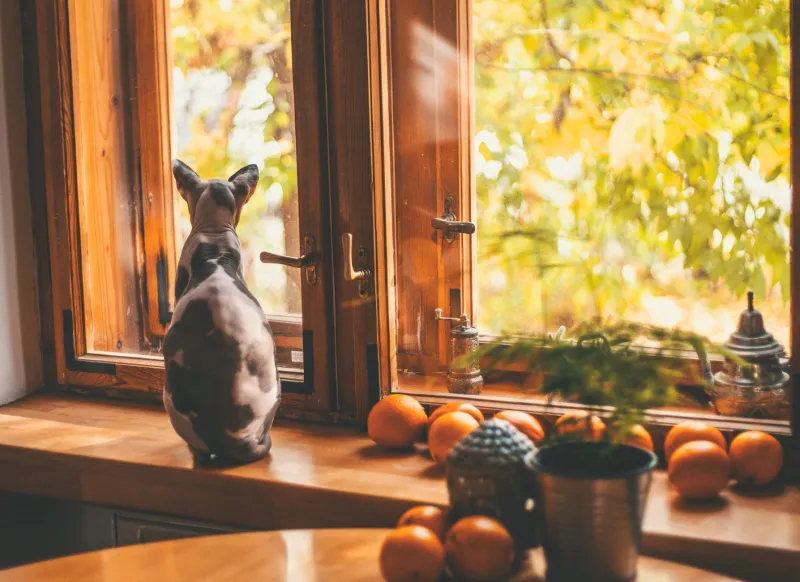
As daylight hours expand and temperatures start climbing, most cats experience a noticeable uptick in energy. This is especially true for cats who haven't been spayed or neutered, but even fixed cats feel the biological pull of spring. You might notice more vocalization, increased interest in windows, or a general sense of agitation that wasn't there in February.
For spring, the goal with your soundscape is gentle stimulation without overstimulation. Nature recordings that include birdsong and light wind work beautifully here — they give your cat's heightened senses something to engage with in a low-stakes way. Think of it as a pressure valve. A curated playlist featuring soft outdoor ambience can redirect that spring energy without encouraging the kind of frantic behavior that leads to knocked-over glasses and 4 a.m. zoomies.
Avoid anything too rhythmically intense during this season. Heavy bass or complex musical structures can amplify restlessness rather than soothe it.
Summer: Cooling Down More Than Just the Room
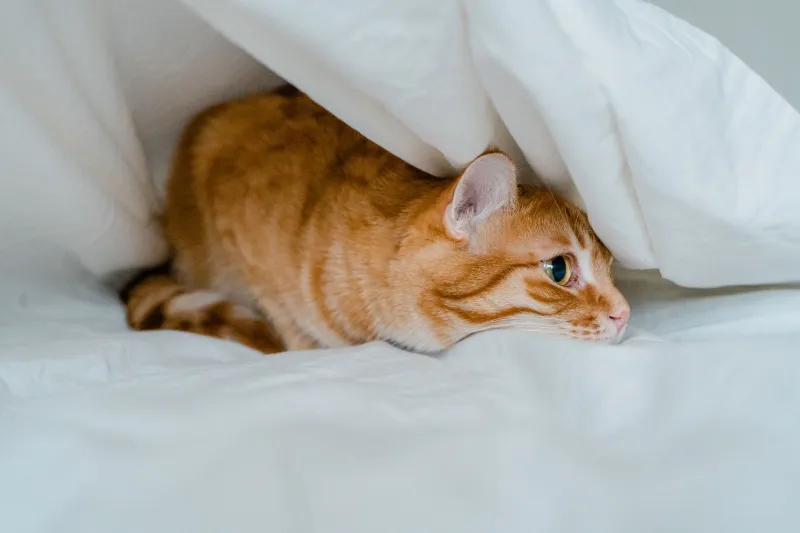
Heat is a genuine stressor for cats. Unlike dogs, cats don't pant to regulate temperature as efficiently, and indoor cats in particular can become lethargic, irritable, or anxious during hot summer stretches — especially in homes without central air conditioning.
Heat-related stress often shows up as unusual hiding, decreased appetite, or sudden aggression. Sound can't lower the thermostat, but it can meaningfully reduce the psychological load your cat is carrying.
For summer, lean into slower tempos and lower frequencies. Research on species-specific music for cats — pioneered by composers and animal behaviorists like Charles Snowdon — suggests that cats respond best to sounds built around tempos similar to their own purr and resting heart rate. In summer, that calming anchor becomes even more important. Ambient tracks featuring gentle water sounds (think: a slow stream, light rainfall) can have a measurable cooling effect on mood, even when the actual temperature hasn't budged.
If your cat tends to hide under the bed during heat waves, try placing a small Bluetooth speaker nearby playing a low-volume water ambience track. You might be surprised how quickly they settle.
Fall: The Anxiety of Transition
Fall is sneaky. The changes are gradual — shorter days, cooler mornings, kids going back to school, routines shifting — but cats notice every single one of them. For a species that thrives on predictability, autumn can feel like the ground shifting underfoot.
Separation anxiety often spikes in fall, particularly when summer's more relaxed household schedule tightens back up. If your cat was used to having people around more during July and August, the return to regular work and school schedules in September can trigger real distress.
This is a great time to lean on consistency in your sound routine. If you haven't already built a habit of leaving Cat Calm Radio on while you're out of the house, fall is the perfect moment to start. Familiar, repeated soundscapes become a kind of auditory security blanket — your cat learns that this sound means everything is okay, even when the house is quiet and the light outside looks different than it did last week.
Classical compositions arranged in the lower registers, or ambient tracks with a steady, predictable rhythm, tend to work especially well for fall anxiety. Avoid anything too sparse or too unpredictable — your cat doesn't need more novelty right now.
Winter: Addressing the Indoor Confinement Blues
Winter is where things can get genuinely hard for indoor cats. Less sunlight, less environmental stimulation, colder temperatures that make even the most adventurous cat reluctant to sit by a drafty window — it all adds up. Some cats sleep more than usual. Others become clingy or irritable. A few develop stress behaviors like over-grooming or compulsive eating.
If your cat seems flat or withdrawn during the winter months, don't immediately assume something is medically wrong (though a vet check is always a good idea). Consider whether their environment has become sonically boring. A quiet house in January can feel very empty to an animal with hearing as acute as a cat's.
For winter, think about layering your soundscapes. A base layer of soft, low-frequency ambient music paired with occasional natural sounds — a crackling fire, light snowfall, distant wind — can make a home feel alive and interesting without being overwhelming. The goal is to recreate a sense of environmental richness that the outdoors normally provides but winter takes away.
This is also a good season to pay attention to your mood, because your cat is absolutely reading it. If you're experiencing your own winter blues, your cat will feel it. A shared listening ritual — both of you settled on the couch with something warm and slow playing in the background — is good for both of you.
The Bigger Picture
You don't need to overhaul your entire setup four times a year. A few thoughtful adjustments — swapping a playlist, shifting the volume up or down, adding or removing certain types of ambient sound — can make a real difference in how smoothly your cat moves through each seasonal change.
The cats who seem to handle seasonal transitions best tend to have owners who are paying attention. Not obsessively, just attentively. And if you're already the kind of person who thinks about what your cat is hearing, you're already most of the way there.
Tune in. Adjust. Repeat. Your cat will thank you — probably by sitting directly on your laptop.